
All workProject profile / 01
Diwani
ديواني
Arabic language · Product design · Development
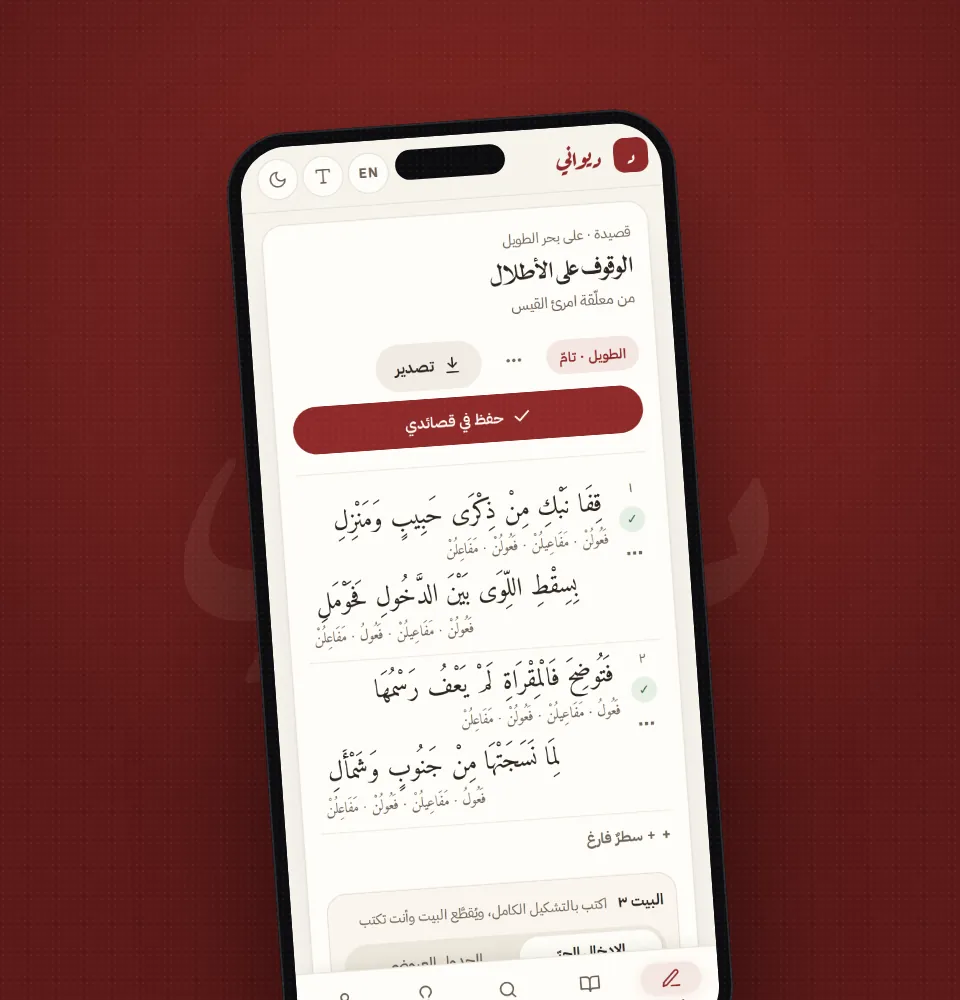
A poetry editor built around the sixteen classical Arabic meters. Write a bayt and Diwani scans it as you type: each foot is named, every ziḥāf and ʿilla is marked where it falls, the rhyme is checked against the poem’s rawī, and the bahr is chosen on al-Khalīl’s prosodic circles.
- Status
- Live · free to use
- Platform
- Web app, installable; works offline
- Languages
- Arabic interface, with English
- Our role
- Concept, prosody engine, product design, Arabic interface writing, development
The brief
Classical Arabic prosody has exact rules and almost no software that respects them. The tools that exist check a finished line, or reduce a meter to a string of symbols the poet has to decode.
We wanted an editor that behaves like an informed reader sitting beside the poet: one that knows the meter, names what it sees in the poet’s own terms, and never gets in the way of writing.
What we did
- Built the prosody engine: the sixteen meters with their tāmm and majzūʾ forms, every permitted ziḥāf and ʿilla, and the rules for where each may occur.
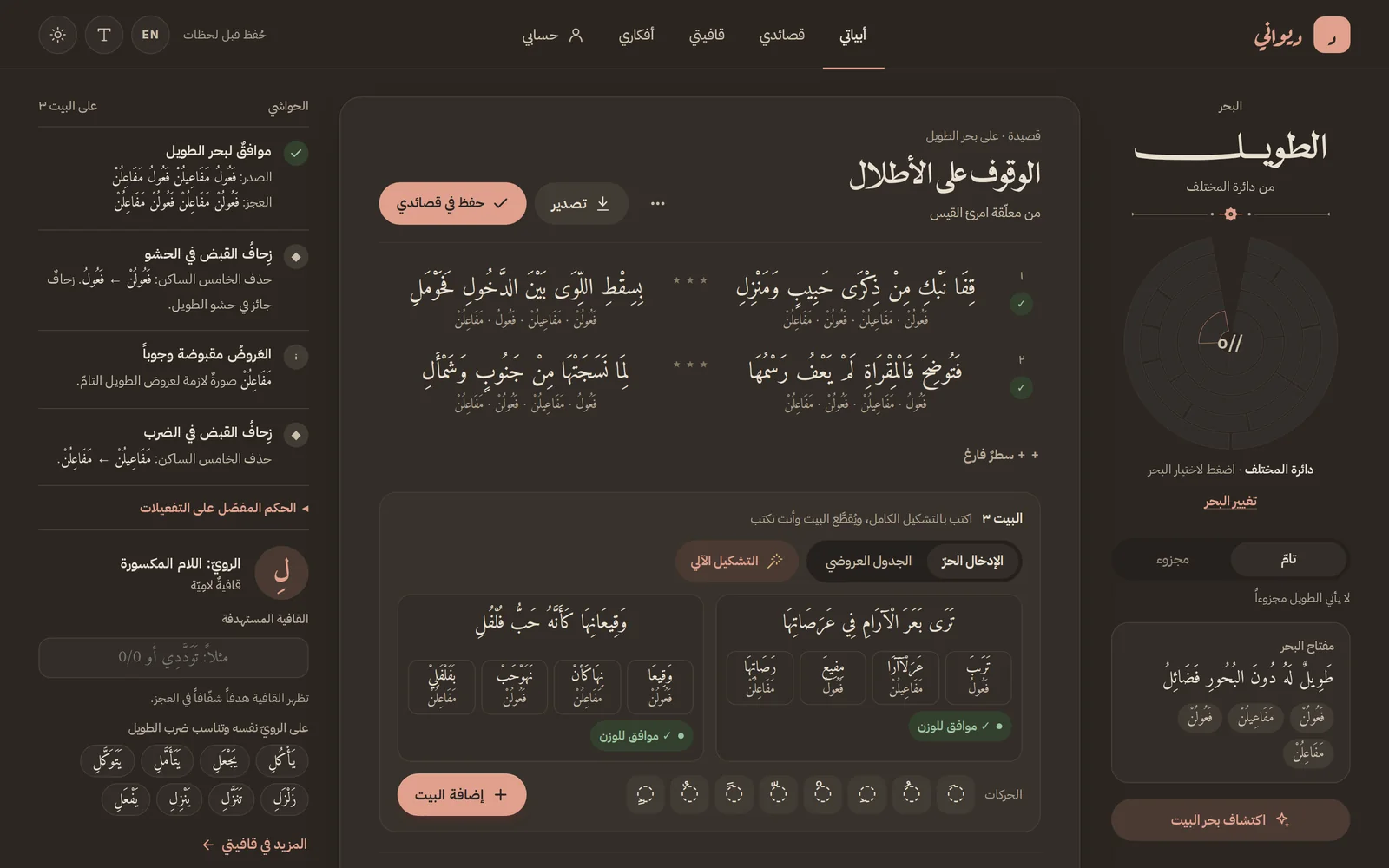
- Designed the writing page so the verdict reads as margin notes beside the poem, not as error messages.
- Wrote the Arabic interface with the terms poets already use (ṣadr, ʿajuz, ʿarūḍ, ḍarb, rawī), and an English interface for readers coming to Arabic poetry from outside.
- Built the library around it: saved qaṣāʾid, dīwāns, an ideas notebook and a rhyme lab, with local-first storage, optional cloud sync and backups.
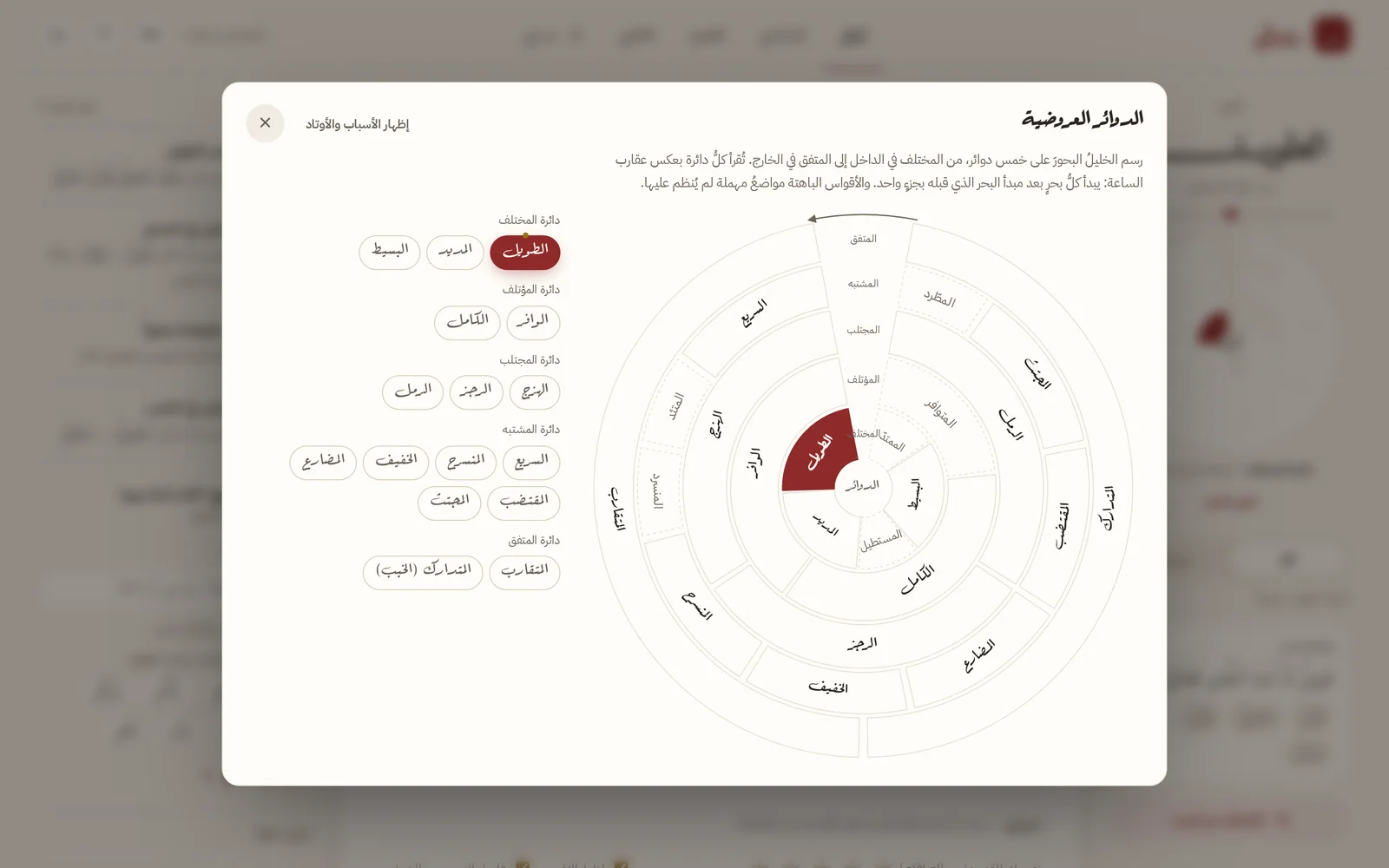
- Drew the meter picker as al-Khalīl’s five prosodic circles: each ring read in the direction of Arabic, the neglected positions in place, and the asbāb and awtād shown on request.
- Wrote the privacy notice and kept the app to it: no ads, no trackers, no cookies, and nothing leaves the device unless the poet signs in.
Screens
Highlights
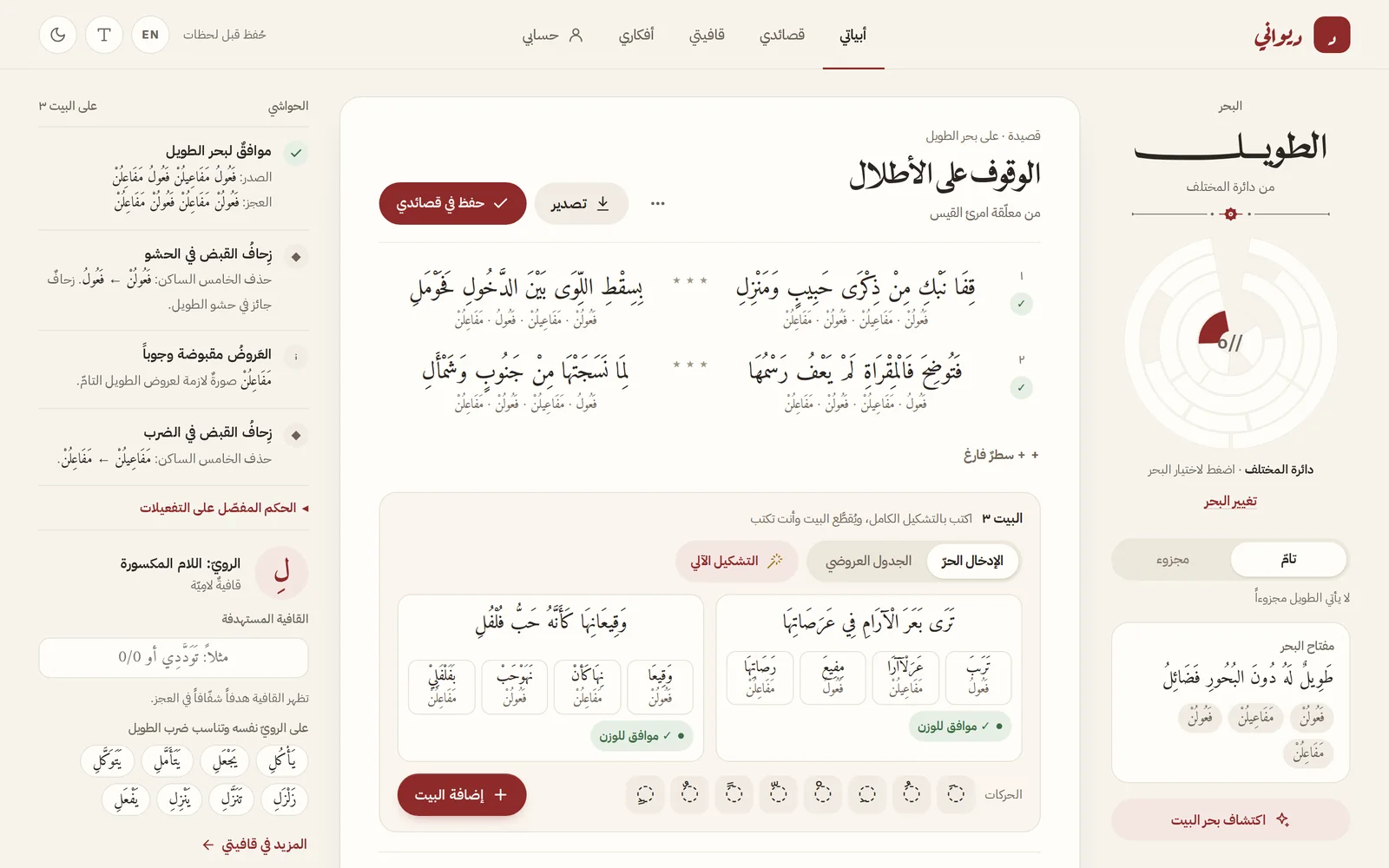
Scansion as you type
Each hemistich is scanned live. Feet appear beneath the line, with the matching form highlighted and any fault pointed to the letter that caused it.
The prosodic circles
The bahr is chosen on al-Khalīl’s five circles, drawn as he arranged them: the sixteen meters in their rings, the neglected ones faded, and the asbāb and awtād one tap away.
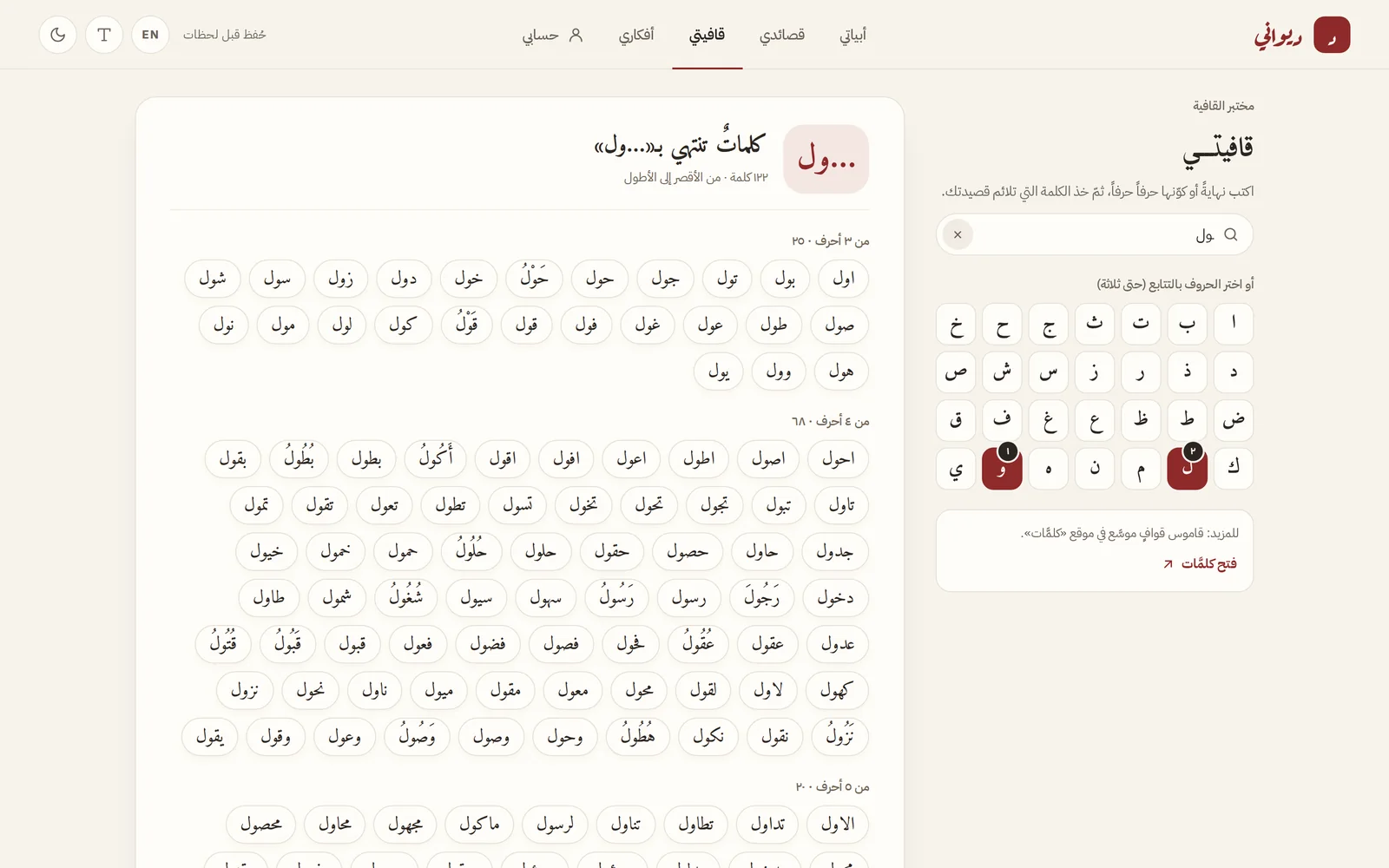
Rhyme, checked
Diwani finds the poem’s rawī and its vowel, flags a bayt that breaks from them, and suggests words on the same rawī that complete the ʿajuz you are writing.
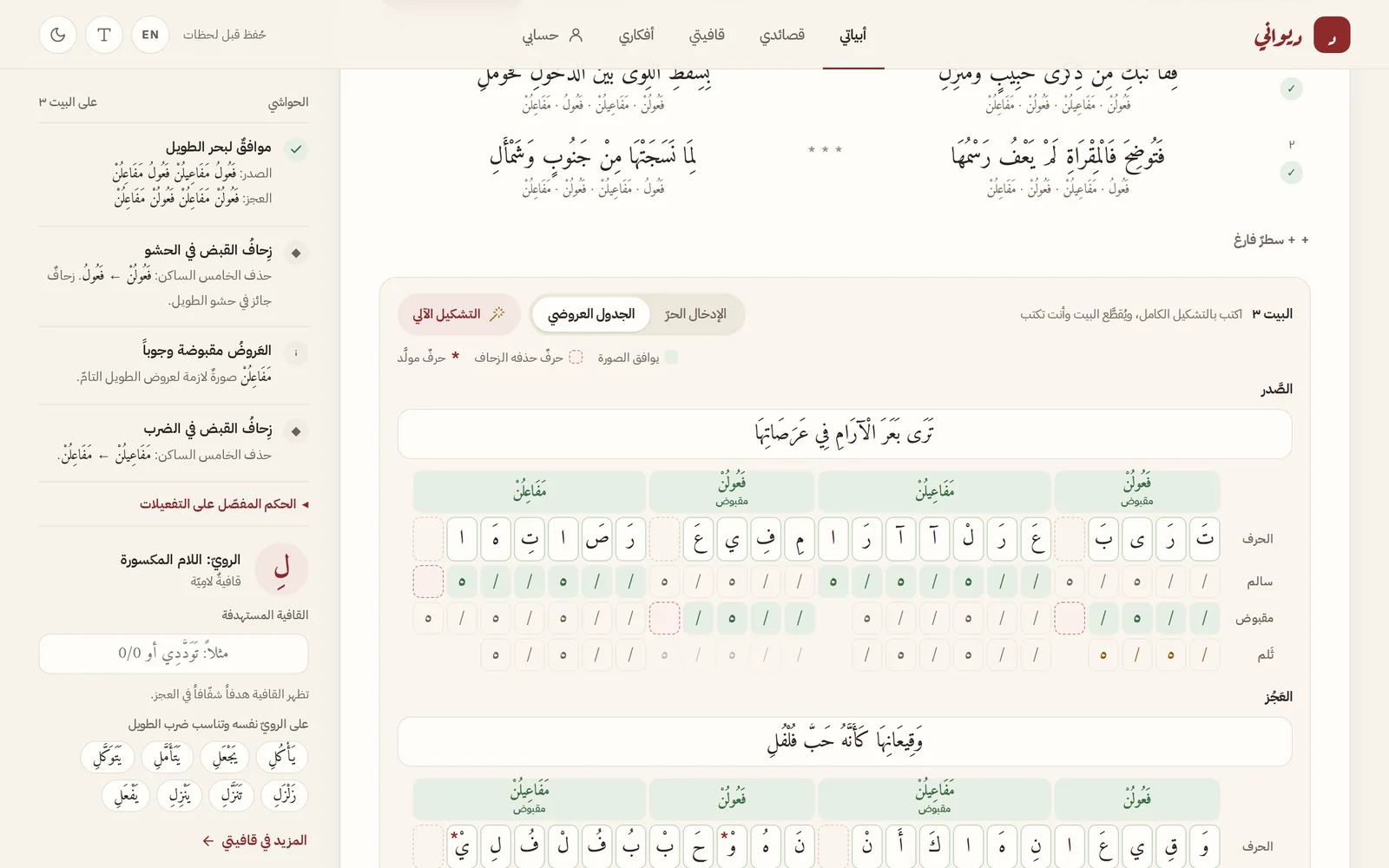
The table mode
An alternative view drops the letters of a bayt into their feet one by one, for teaching, checking, and the pleasure of seeing the meter laid bare.
Bahr detection
Paste any bayt and Diwani names its meter, or lists the closest ones when the verse does not scan cleanly.
Language tools
Auto-diacritization on the device, the Siwar unified dictionary, synonyms and antonyms, and a poetry lexicon, each opening beside the poem.
Export and print
Qaṣāʾid export to Word or print as PDF, in parallel or staggered layouts, with Amiri, Scheherazade or Noto Naskh and a live preview of the page.
Where it stands
Diwani is live and free, in daily use by its poets, with a privacy notice that promises no ads and no tracking. A Dīwānī+ tier is being prepared for those who write every day: version history, a prosody report for the whole qaṣīda, unlimited dictionaries, and the dīwān exported as a designed book.
Built withJavaScript, single-page appProgressive Web App, offline-firstFirebase for accounts and syncNetlify, with a serverless proxy to the Siwar dictionary